Sorry we have been out of touch for a bit. There has been very little wifi where we have been lately.
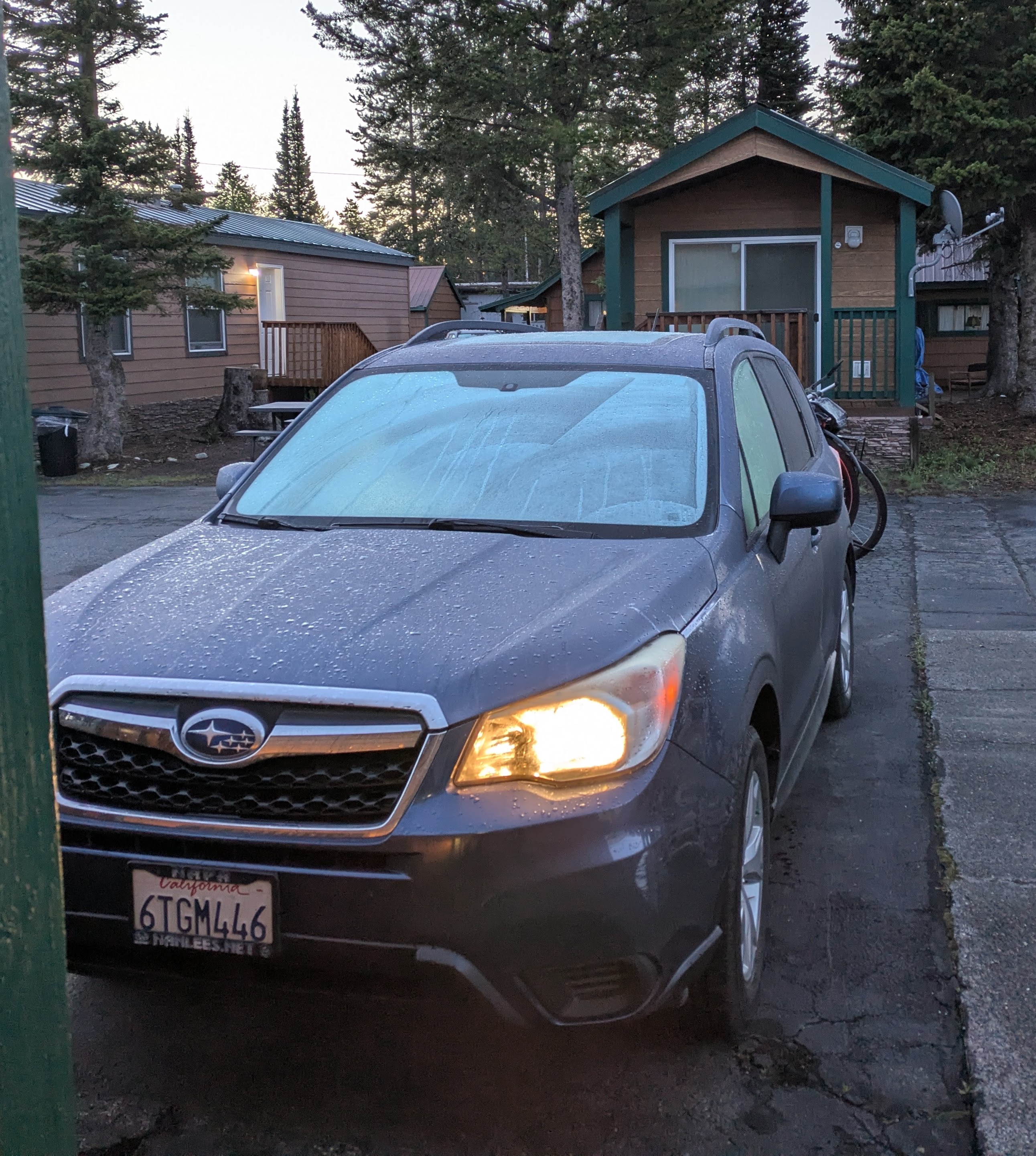
Yesterday seems like it lasted at least 48 hours. We got up at 5:30am in West Yellowstone. We needed to be at Old Faithfull Inn for the beginning of our tour at 7:45. It’s about an hour’s drive, but if you remember we had canceled our plans to camp in Yellowstone because it was forecasted to rain, and we had discovered our tent is not very rainproof. It did rain, and then got very cold, so we had to drive very carefully. Here is a pic of our car that morning.
We made it safely. I’m grateful to God and my husband for driving safely, despite my concerns that we would be late. We actually had time for breakfast.
The tour we had booked was a trip around what they call “The Big Loop.” It was a hundred and fifty mile drive, covering several of the “must see’ spots in Yellowstone. It was a lot of fun, but very tiring.
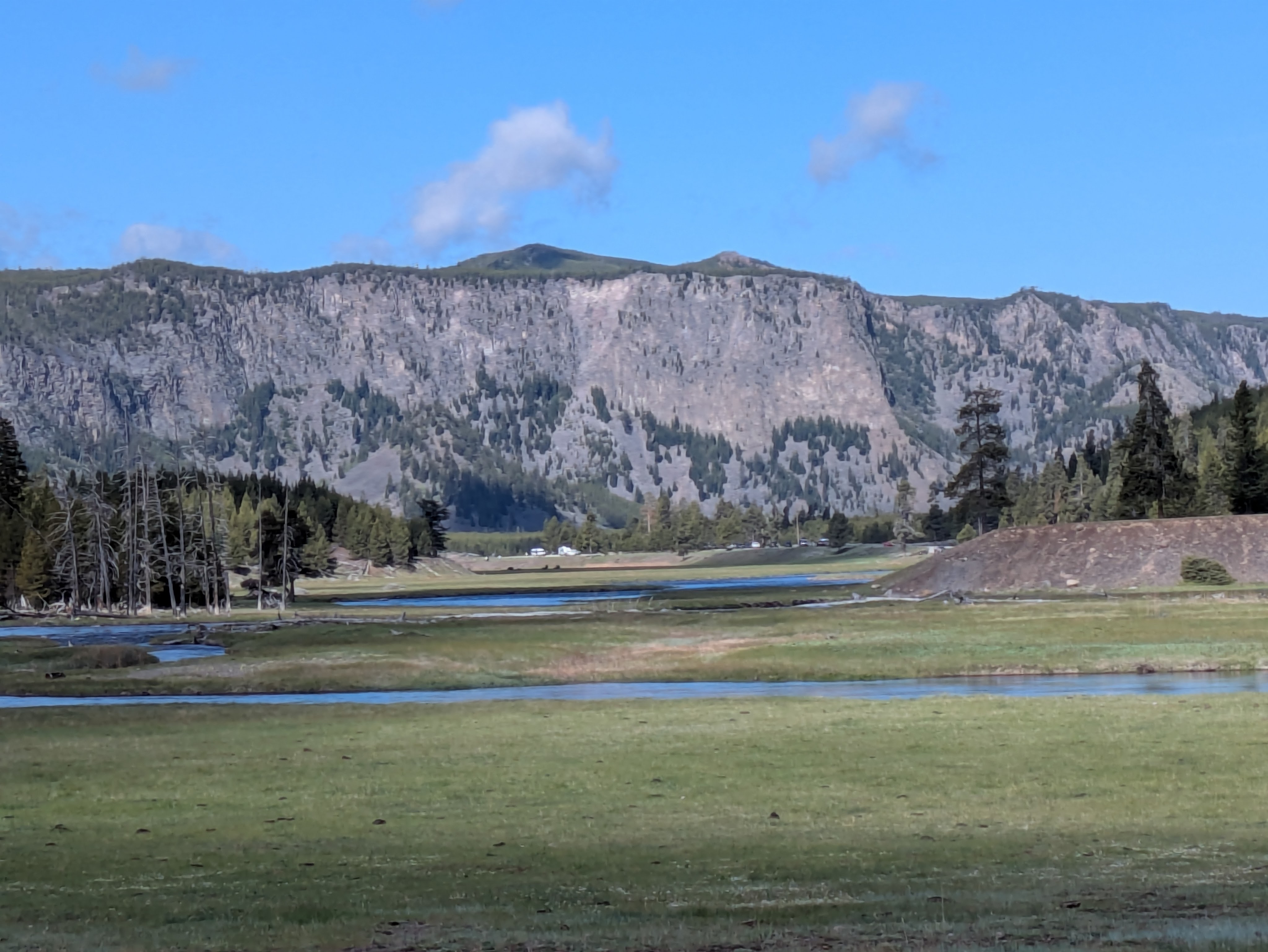
Yellowstone is mostly in a gigantic volcano’s caldera. While a standard volcanic crater is caused by explosions chipping away at the top of a vent, a caldera is a massive sinkhole formed by the magma chamber emptying during an explosive eruption. This causes the ground above to collapse inward. The caldera holding most of Yellowstone is thirty miles across and forty-five miles long. You can see the edges of it from many areas.
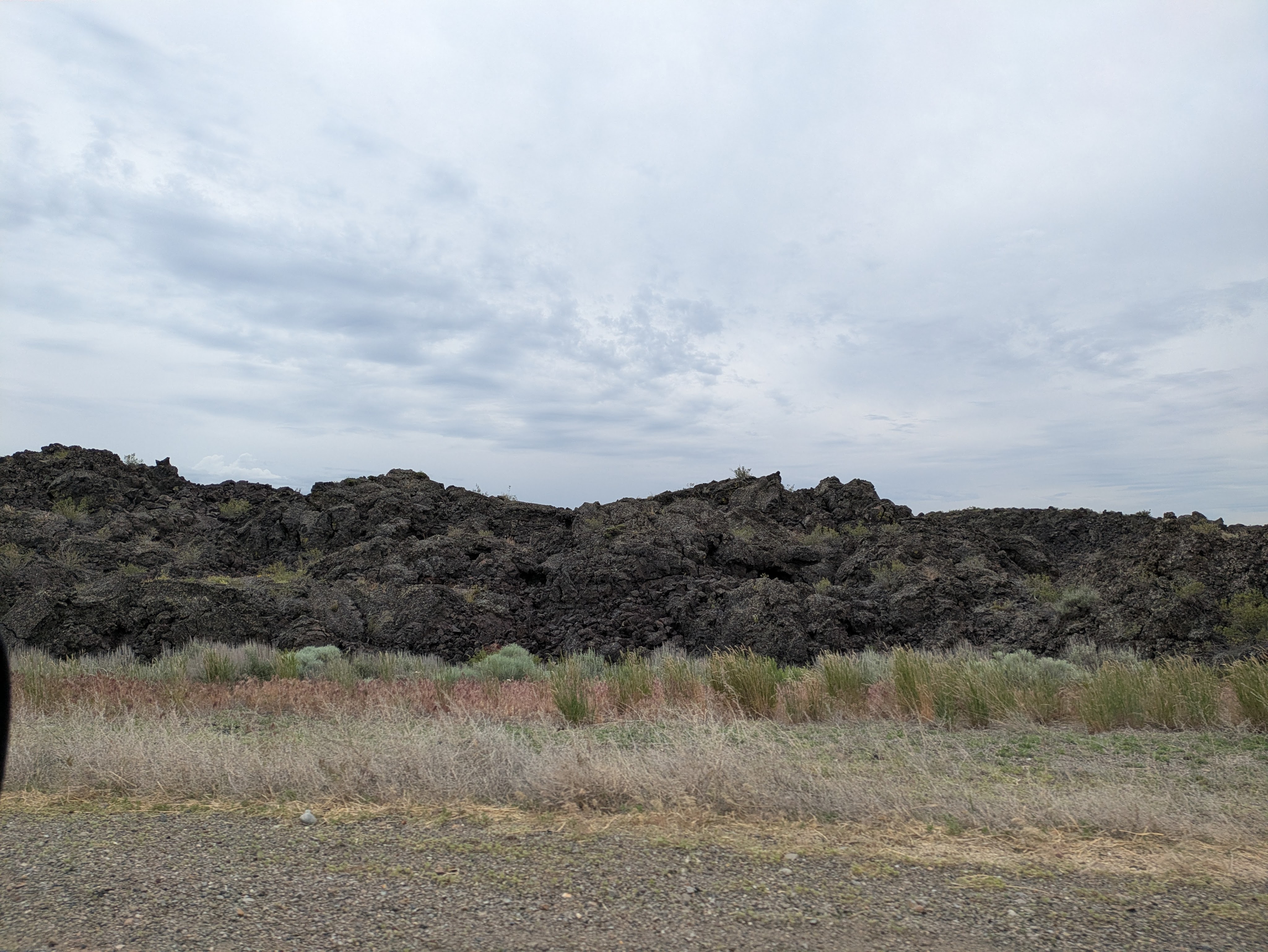
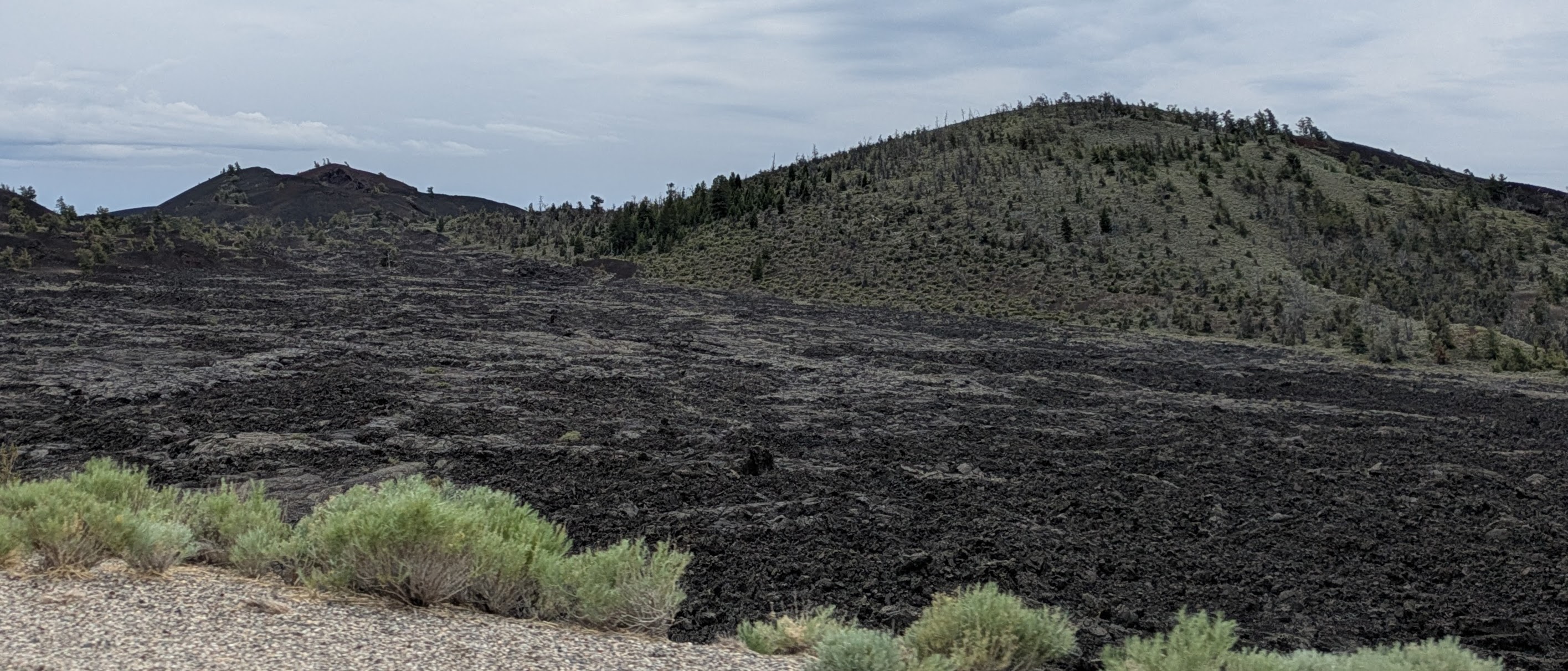
Of course all this talk about volcanos made me think of the lava beds we had seen a few days earlier in the Craters of the Moon National Monument.
We got to visit places with the five hydrothermal features. We Started at Old Faithful, an example of geysers, when steaming hot water erupts in a column in the air.
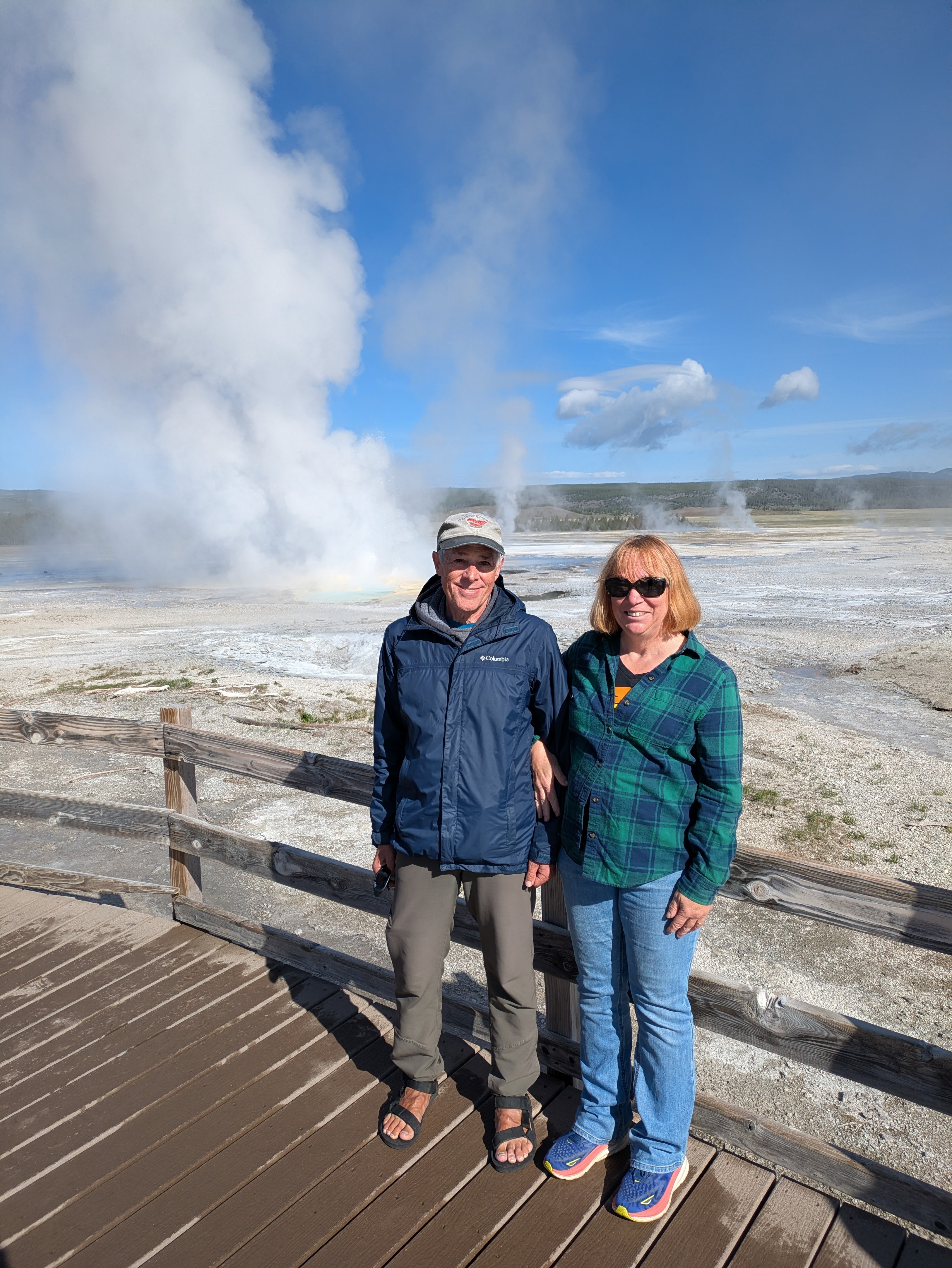
This picture is a bit late! No water shooting up! But we were having fun!
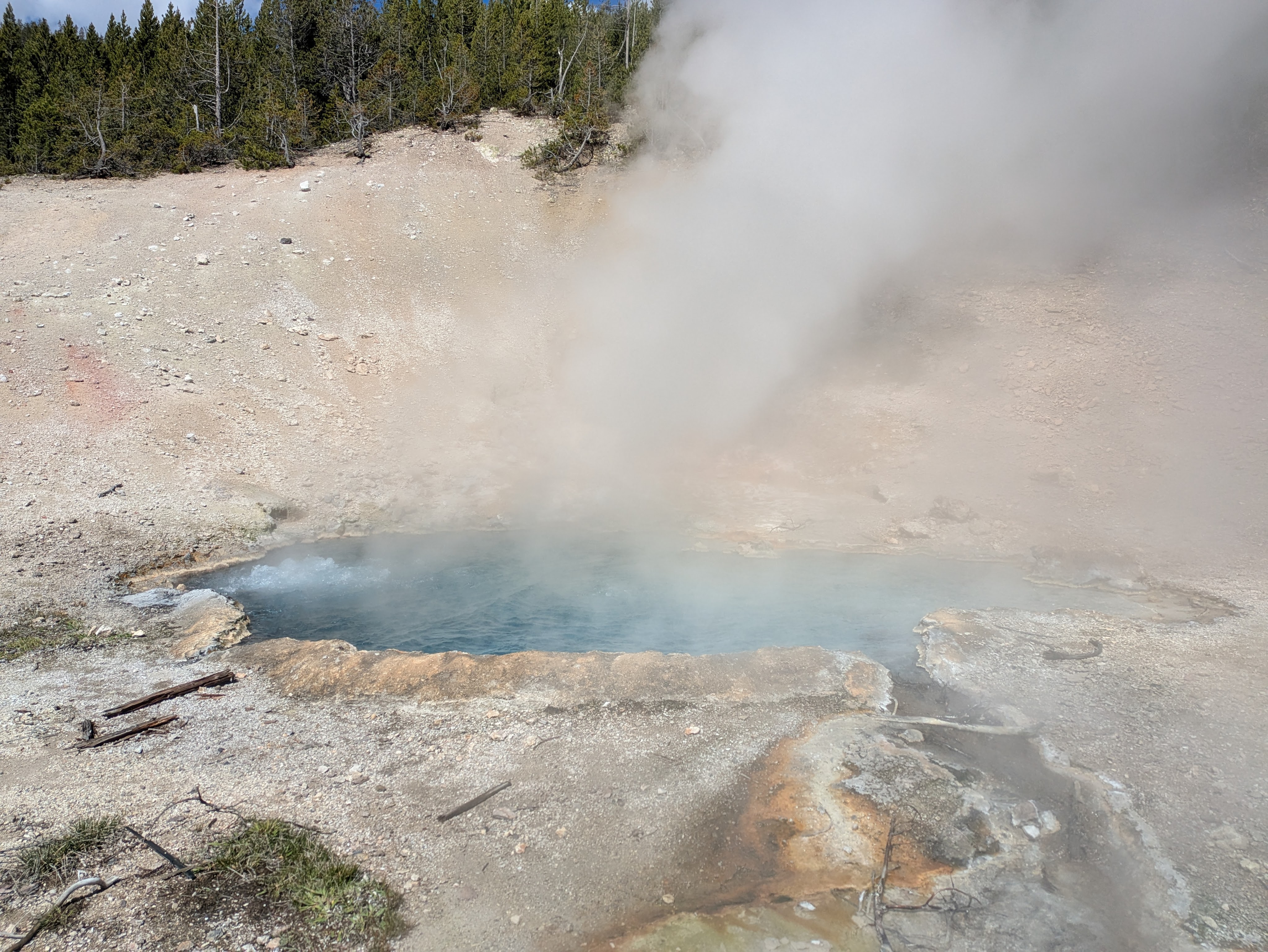
Hot springs, these can be nice to sit in in some areas, but not here! You can see it boiling!
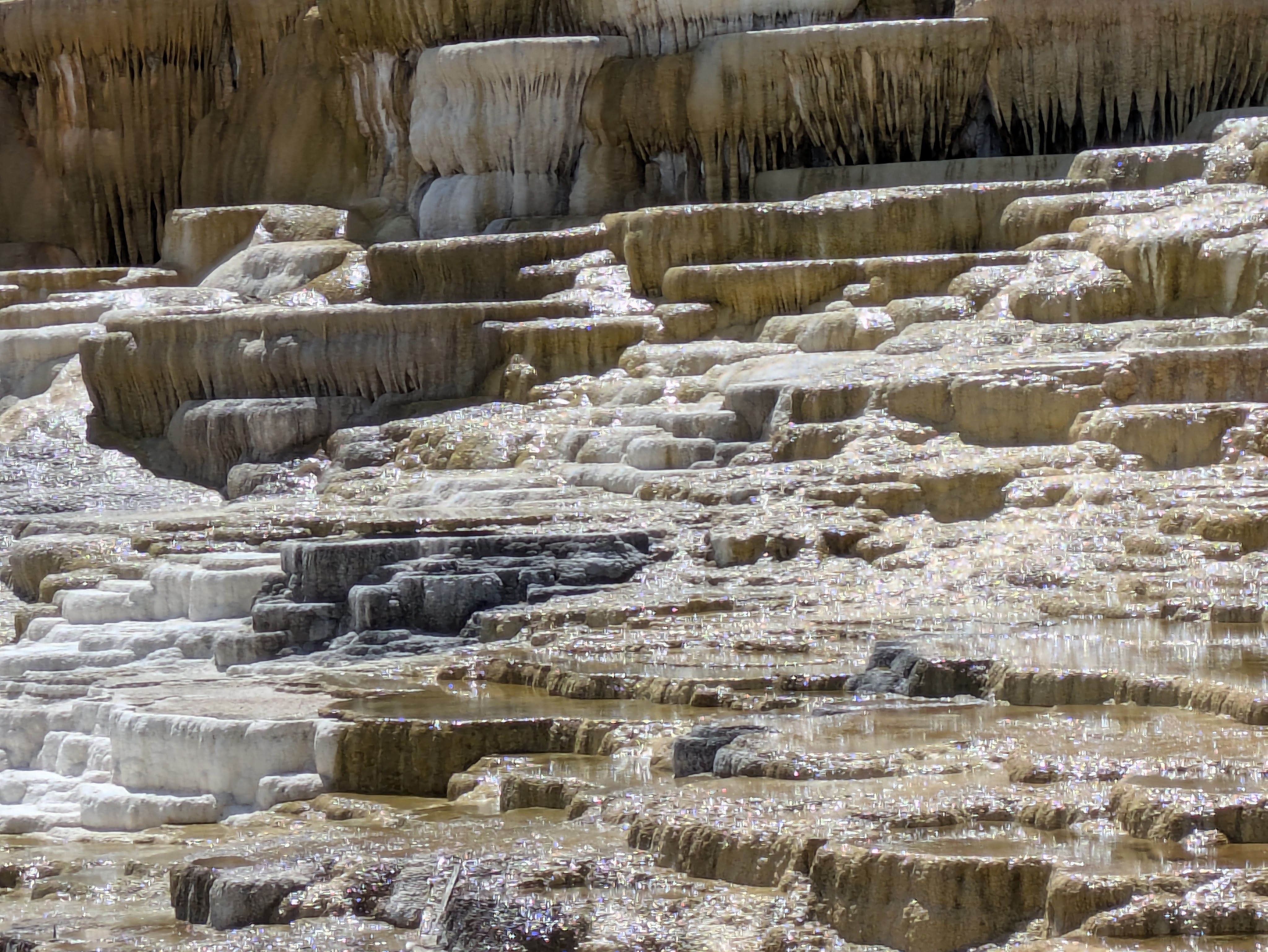
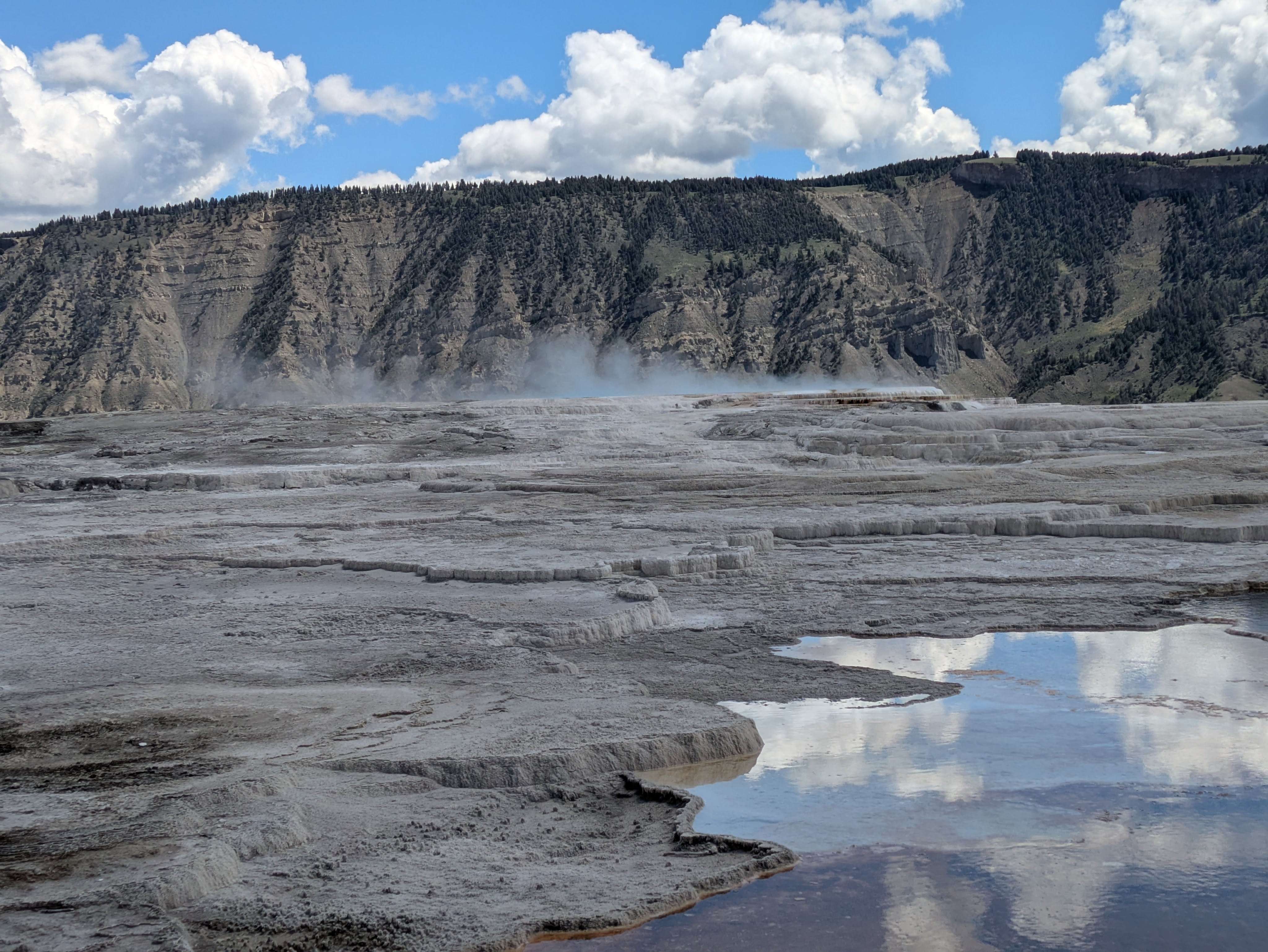
This is an example of travertine terraces. These are at Mammoth Hot Springs. The hot water brings up minerals from beneath the surface, and as it cools travertine is created. The area keeps changing and growing.
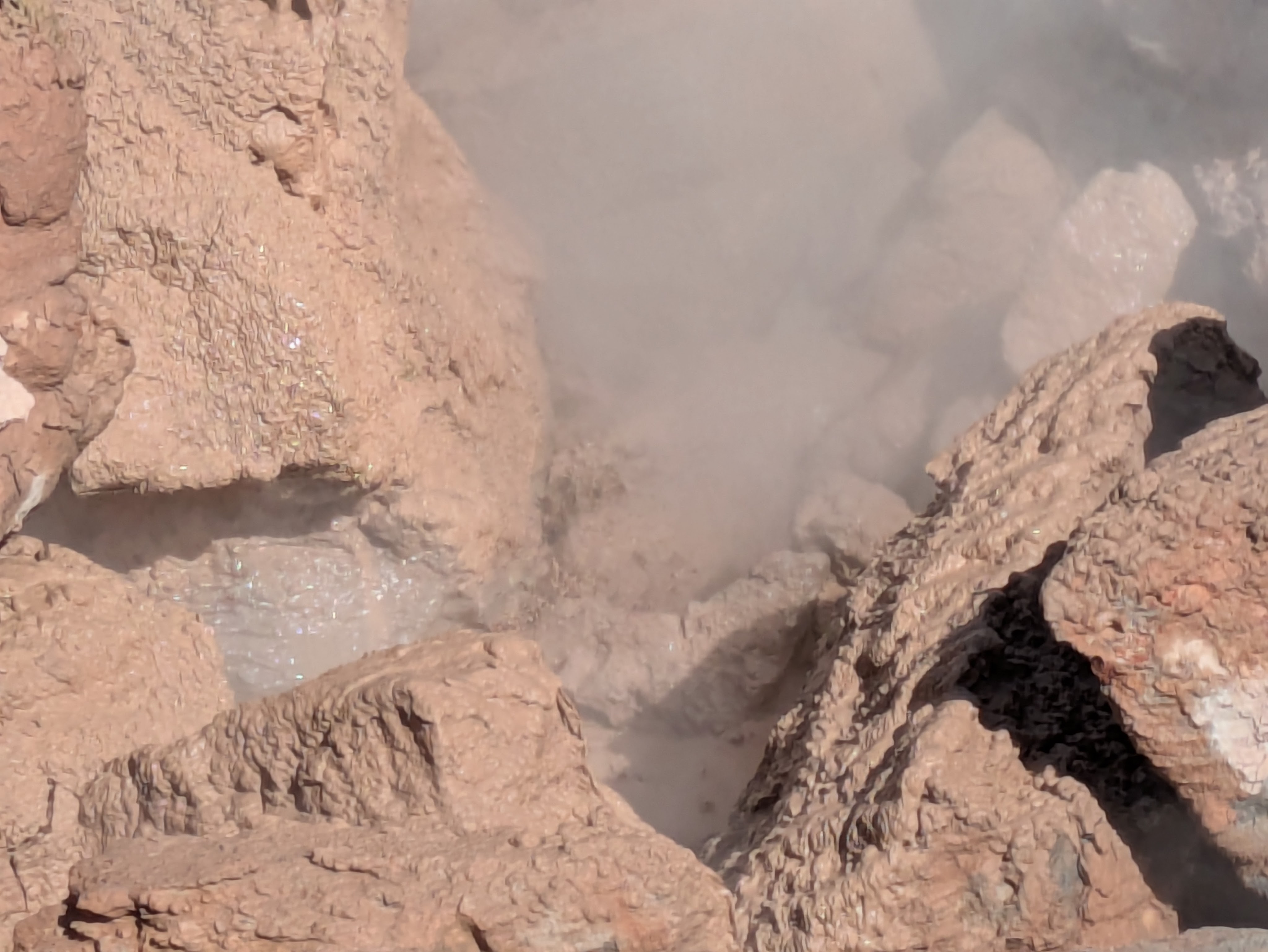
This is a picture of the mud pots. Acid from the volcanic gasses and micro-organisms turn the surrounding rock into clay and mud. This only happens if there isn’t very much water in the area. Depending on precipitation the consistency can change.
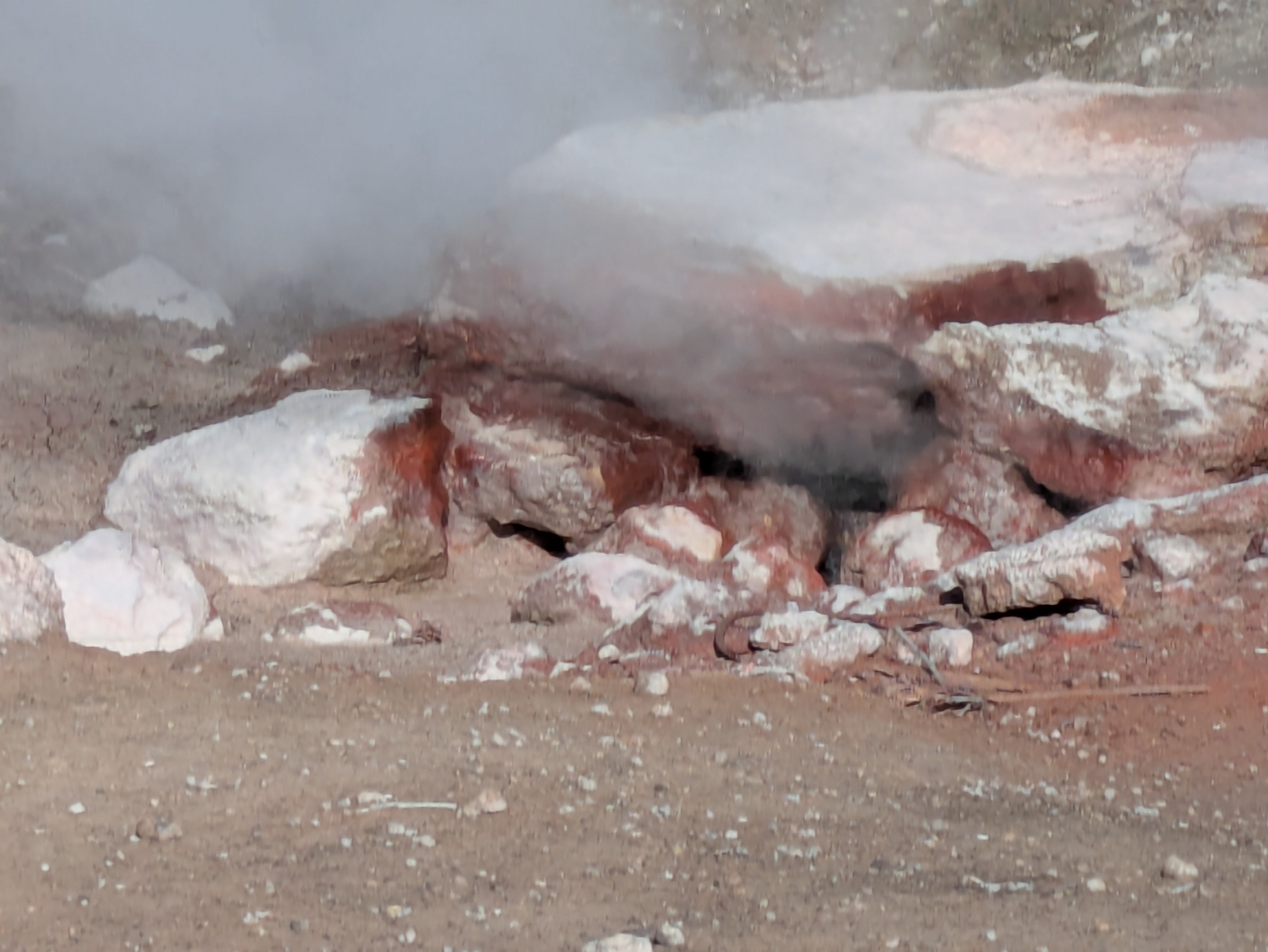
This is a fumarole. When you stand near it it sounds like a jet engine! Fumaroles are even hotter than the geysers. They don’t have liquid water, it is all converted to steam.
We had a wonderful time at Yellowstone, and I have more to tell you, but I’m really worn out tonight! I’ll try to catch up with everything tomorrow!


So glad to hear from you!